Having software isn’t having a system. Here’s how to build the operating layer that actually runs your property operation — on top of the tools you already use.
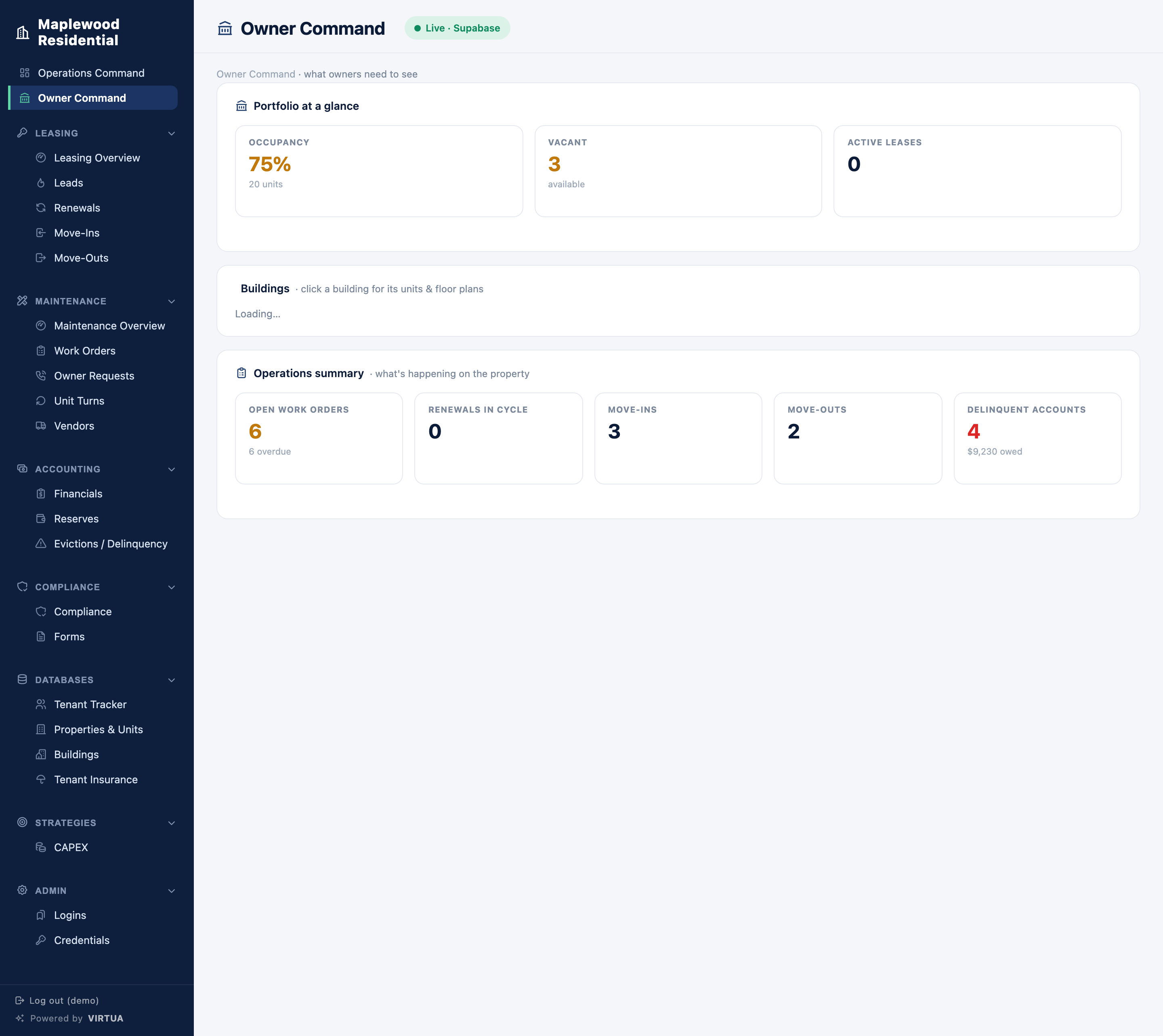
Most property management companies do not have a system. They have software, and they have people, and the people spend their day moving information between the software by hand. It works, in the sense that the rent gets collected and the leases get signed. But it does not scale — and it breaks the moment one key person is out for two weeks.
An operating system is what closes that gap. Here is what it is, and how it gets built.
What a property management operating system actually is
A system of record stores your data. An operating system runs your operation.
The distinction matters. Your PMS knows the lease exists. An operating system knows the lease is expiring in 74 days, drafts the renewal, sends it, chases the signature, routes the countersignature, files the document and updates the rent — and shows you, on one screen, every renewal in flight and who owns it.
It is not a replacement for your software. It is the layer on top that makes the whole operation work: every workflow with a clear trigger, a clear owner, and a clear definition of done.
Step one — Audit
You cannot build a system around an operation you cannot see. The first step is an honest map of how the work happens today: every tool, every spreadsheet, every manual handoff, every “I just know to do that on the 5th.”
Most owners are surprised by this map. It is the first time the operation has ever been written down in full — and the first time the cost of it is visible. A renewal that takes two hours, fifty times a month, is not a workflow. It is a part-time salary.
Step two — Map
Once you can see the operation, you design the system around it — around the way your team actually works, not a generic template they have to bend themselves into.
This is where workflows get rebuilt. Each one gets a trigger (what starts it), an owner (who is accountable), a sequence (what happens, in order), and a definition of done. The tools you already run get connected into a single hub, so data is entered once and pulled from one place.
Step three — Build
Then you build it, migrate everything onto your own accounts, and run it. The workflows go live one at a time. The manual steps disappear into software. The operation keeps running the whole time — you are not turning anything off, you are removing the parts that never should have been manual.
And then it keeps improving. A system is not a project you finish. It is something you tune as the portfolio grows.
What the system covers
A real operating system is not a renewal tool. It runs the whole operation: leasing and renewals, move-ins and move-outs, maintenance and work orders, inspections, compliance and legal deadlines, rent and delinquency, owner reporting, and vendor management. One system, every workflow.
Why it changes how you grow
Without a system, every hundred units you add is another hundred units of paperwork — so the only way to grow is to hire. The chaos scales with the portfolio.
With a system, growth stops adding chaos. The work that used to need a new hire now runs on software you already built. That is the difference between a property management company that is merely busy and one that is genuinely scalable.