When the operation gets heavy, the instinct is to add a person. Usually the problem is not headcount — it is structure. Here is how to tell the difference before you make an expensive hire.
There is a moment every growing property management company hits. The volume gets heavy. Things start slipping. The founder is working nights to keep up. And the obvious conclusion is: we need another person.
Sometimes that is right. More often, it is the most expensive mistake available — because the new hire inherits the exact same chaos, with no system to land in, and starts firefighting alongside everyone else. You did not add capacity. You added another person to the switchboard, and another salary to the problem.
Headcount hides the real issue
When an operation runs on memory, spreadsheets, and one person’s availability, adding people does not fix it. It papers over it — for a while.
The new coordinator learns the tribal knowledge, picks up some of the load, and the pressure eases for a quarter. Then volume grows again, and you are back where you started, now with a bigger payroll and the same structural problem: nothing tells anyone where the work actually stands. Everyone stays reactive. Everything stays urgent.
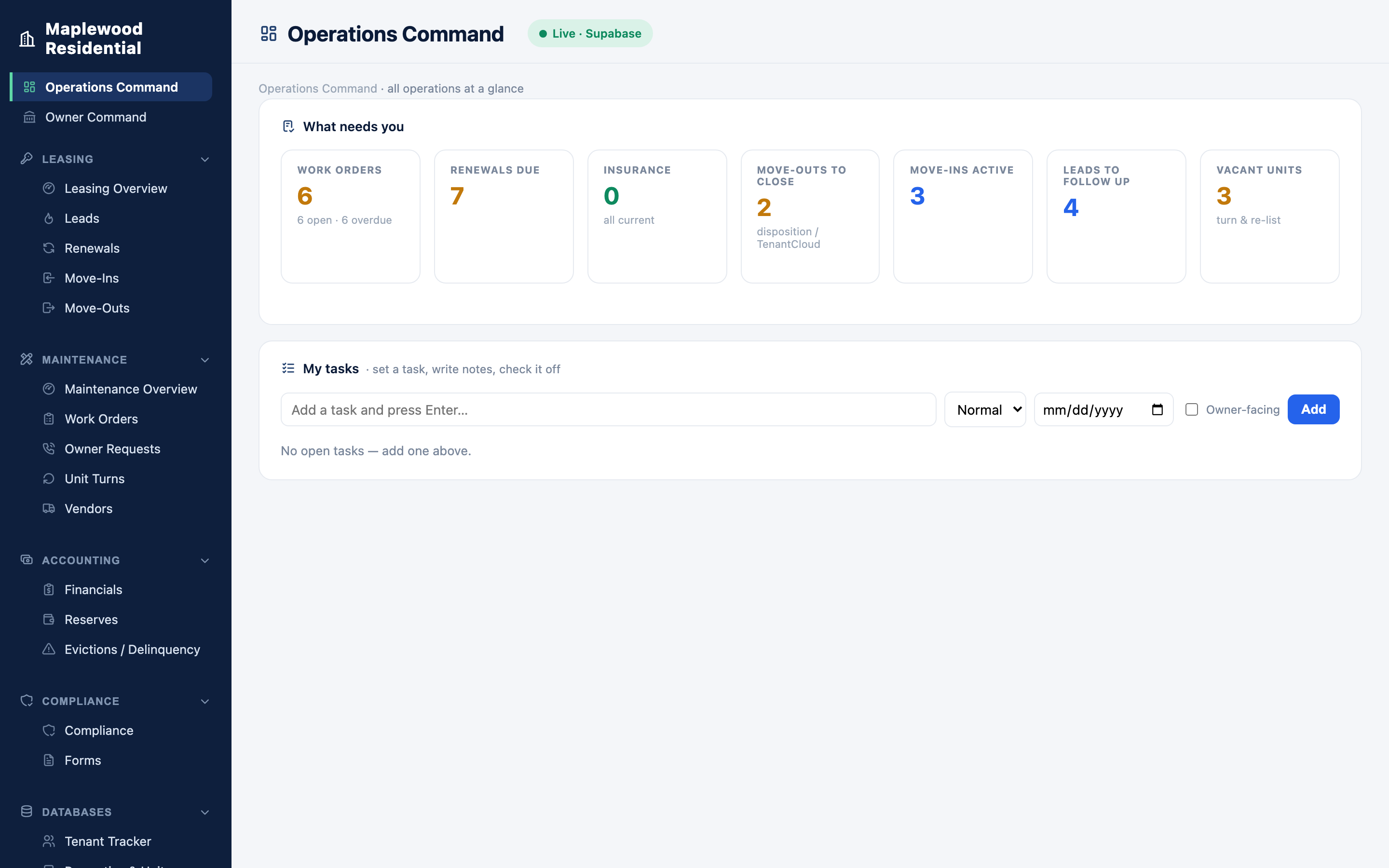
Here is the tell. If you brought on a great hire tomorrow, would they walk into a clear system — defined workflows, visible status, obvious next actions — or would they walk into your head? If the answer is your head, headcount is not your bottleneck. Structure is.
What a system does that a hire can’t
Across our clients, we have removed more than eight hundred and fifty hours a year of administrative work — with zero new hires. Not because the people were the problem, but because the repeatable work never needed a person in the first place.
A lease renewal happens the same way every time. So does work-order intake, the late-notice cadence, the move-out checklist, the compliance deadline. That is not work that needs judgment. It is work that needs a system — one that runs the renewal, routes the work order, escalates the late tenant, and keeps the record straight, so the humans on your team are spending their hours on the things that actually require a human.
A new hire absorbs the chaos. A system removes it. Those are very different purchases, and they are very different prices.
When you actually should hire
This is not an argument against ever growing your team. It is an argument about order.
Build the system first. Then, when you hire, the new person steps into a clear operation — they can see what is open, what is theirs, and what comes next on day one. They spend their time on the high-judgment work you actually hired them for, instead of spending their first six months becoming the next keeper of tribal knowledge.
The right time to add a person is when the work that remains is genuinely human work — relationships, decisions, the problems that vary every time. Not when you are trying to throw a body at paperwork a system should have removed.
Before you post the job
Look at the operation first. Map what your team actually spends its days on, and separate the work that happens the same way every time from the work that needs a person. The repeatable half is your system. The variable half is your future hire’s real job.
Do it in that order, and the hire you eventually make is worth every dollar — because they are walking into an operation that runs, not one that is held together by whoever is most stressed that week.
Keep reading: AI Isn’t Replacing Great Employees. It’s Making Them Great Operators →