A 648-tenant operator’s four managers spent 5–8 hours a month each just scanning for renewals. Here’s how one command center on top of their existing PMS gave back about 650 hours a year.
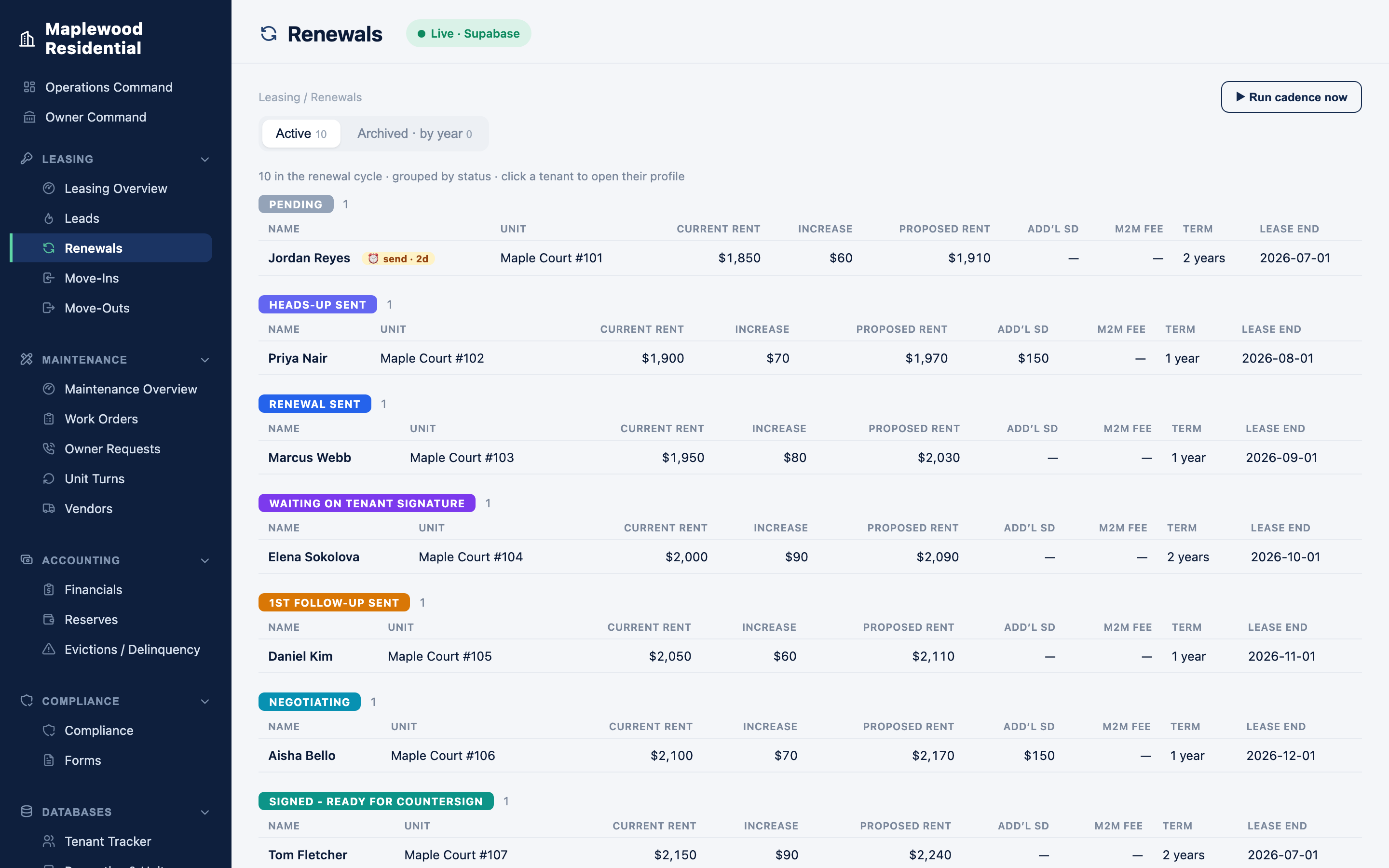
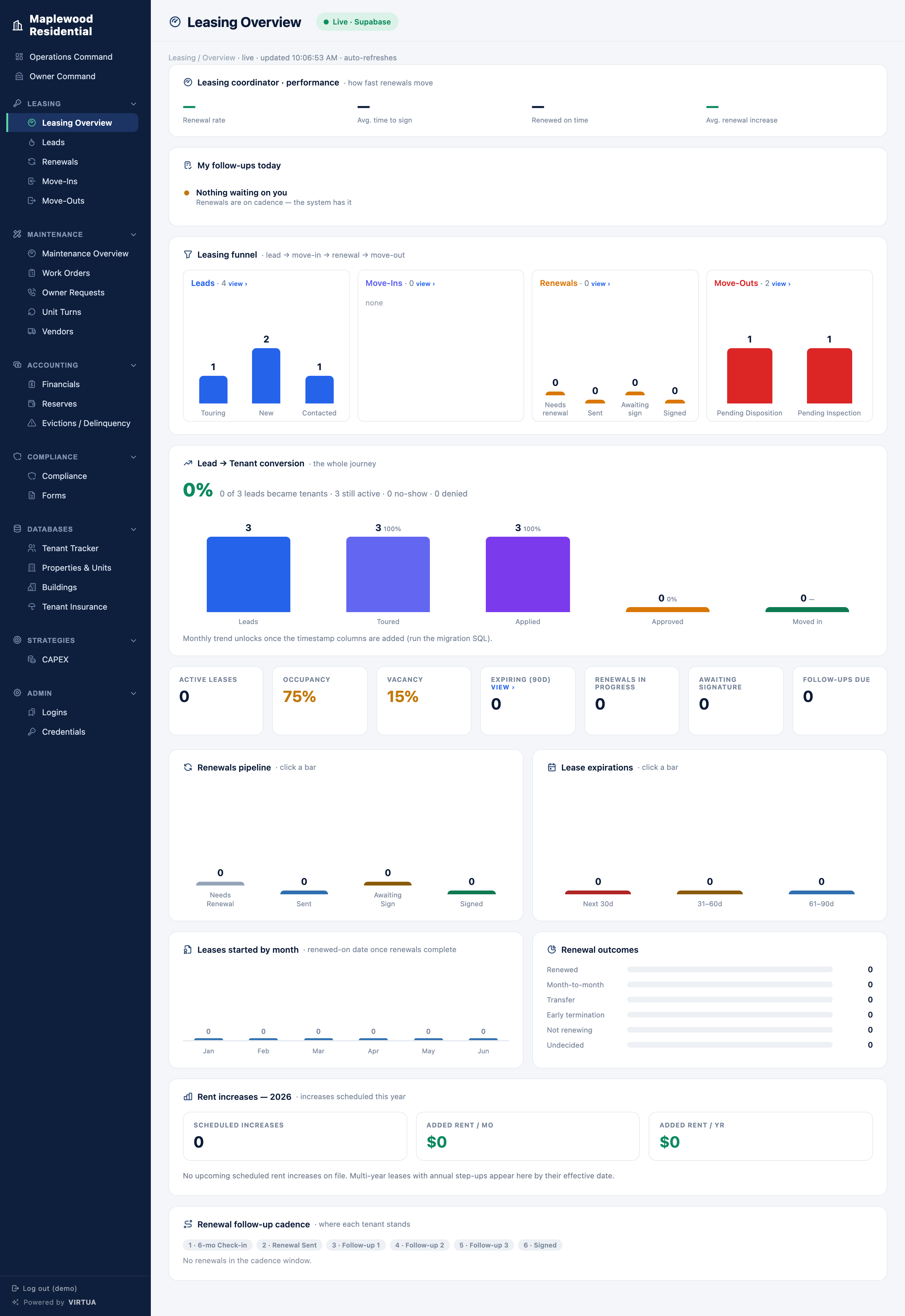
648 tenants. Four property managers. Forty-eight properties. And a renewal process that quietly ate 5 to 8 hours a month — per manager.
This is the story of one operator who got roughly 650 hours a year back without changing their software, adding headcount, or asking anyone to work differently. We just closed the gap their system of record left open.
Where the hours were going
The operator ran a capable PMS. But the PMS stored lease end dates; it didn’t act on them. So every month, each of four managers opened the system and manually scanned their portfolio for leases coming due — reading dates, cross-checking a renewals spreadsheet, and deciding who to contact. Just the scanning, before a single renewal letter went out, cost 5 to 8 hours per manager. Across four managers, that’s 20 to 30 hours a month spent finding the work, not doing it.
Then came the actual renewal: drafting letters, chasing signatures, routing countersignatures, filing PDFs, re-keying new rents. The two-hours-per-renewal workflow we’ve described before — multiplied across 648 tenants.
What we built
We didn’t replace their PMS. We built a command center on top of it — the operating-system layer that watches the data the PMS already holds and acts on it.
- The scan became a trigger. The system watches every lease end date across all 648 tenants continuously and surfaces what’s coming due — no one opens the PMS to look. The 648-lease sweep that took four people hours now runs in about 38 seconds.
- The renewal became two clicks. Enter the new rent and term; the system drafts the letter, sends one envelope per unit, runs the follow-up cadence, routes the countersignature, files the executed PDF, and writes the new rent back to the PMS.
- The record stayed true. Because the rent writes back automatically, the system of record never drifts from reality — no re-keying, no reconciliation.
The result
The monthly scan went from 20–30 hours of skilled time to effectively zero. Add the time saved on the renewals themselves and the operation recovered on the order of 650 hours a year — the equivalent of a part-time hire they never had to make. Renewals also stopped slipping, because the system, not a person’s memory, owns the calendar.
The point of the story
None of this required new software or more people. It required closing the gap between a system that records the work and one that runs it. The renewal was just the clearest place to start — the same pattern now runs their delinquency cadence and move-outs too. If your team is spending hours hunting for work inside a system that already has all the data, that’s not a staffing problem. It’s a structure problem, and it’s the most recoverable time in your operation.