AppFolio, Buildium and Yardi are systems of record — they store the work after a person does it. Here are the four workflows they leave open, and the operations layer that closes them.
Your property management software didn’t fail you. It just left four tabs open.
AppFolio, Buildium, Yardi, Propertyware — they’re excellent at what they are: a system of record. They store the lease, the ledger, the work order, the tenant. But a system of record holds the work after a person has done it. It doesn’t do the work. That gap — between recording the work and running it — is where your team’s hours actually go.
Here are the four workflows your PMS leaves open, and what closing them looks like.
1. Lease renewals, end to end
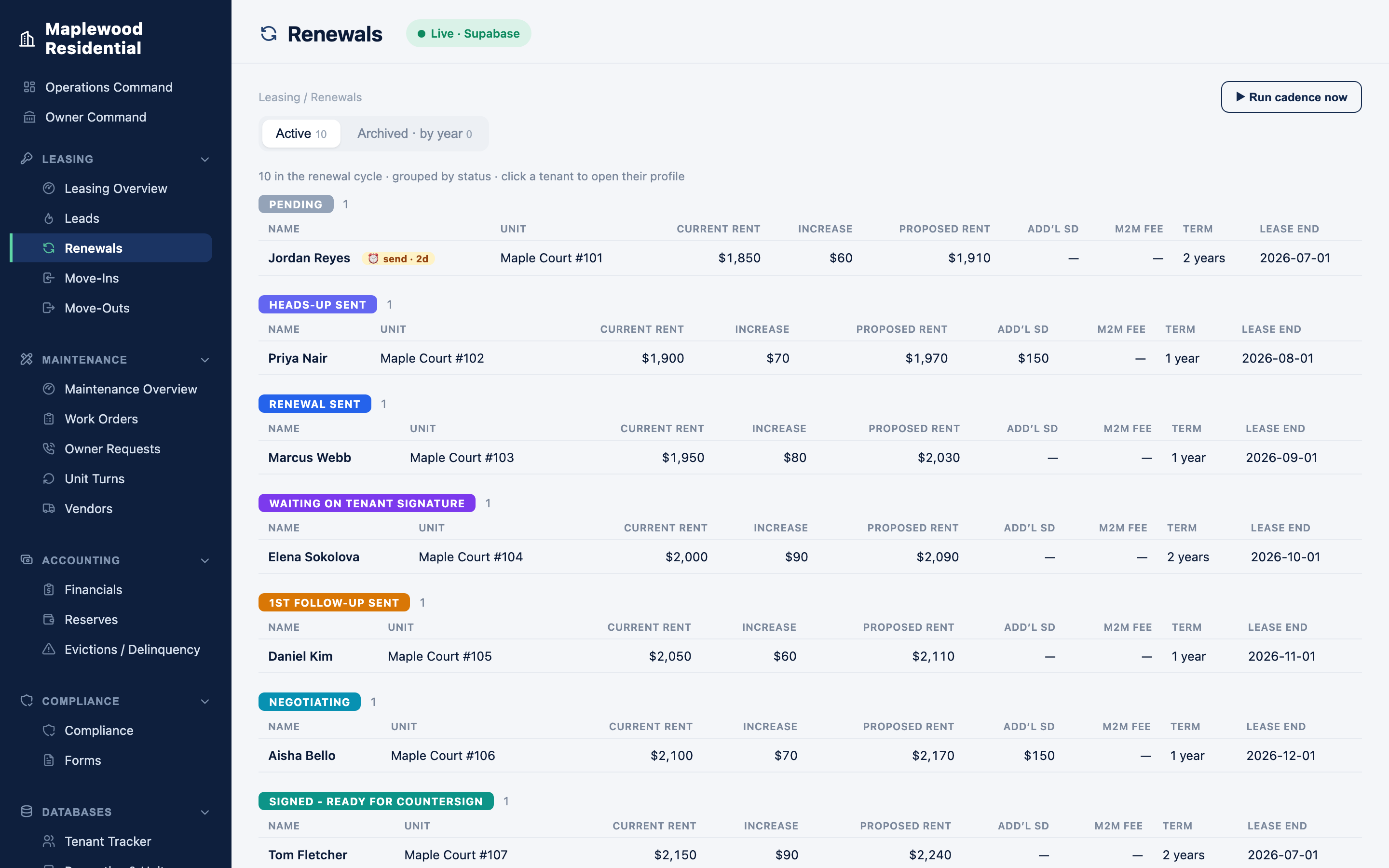
Your PMS stores lease end dates. It will not watch them, draft the renewal letter, send one envelope to every leaseholder, chase the signature on a cadence, route the owner countersignature, file the PDF, and re-key the new rent. Someone does all of that by hand — about two hours per renewal. We broke the full rebuild down here.
2. The delinquency cadence
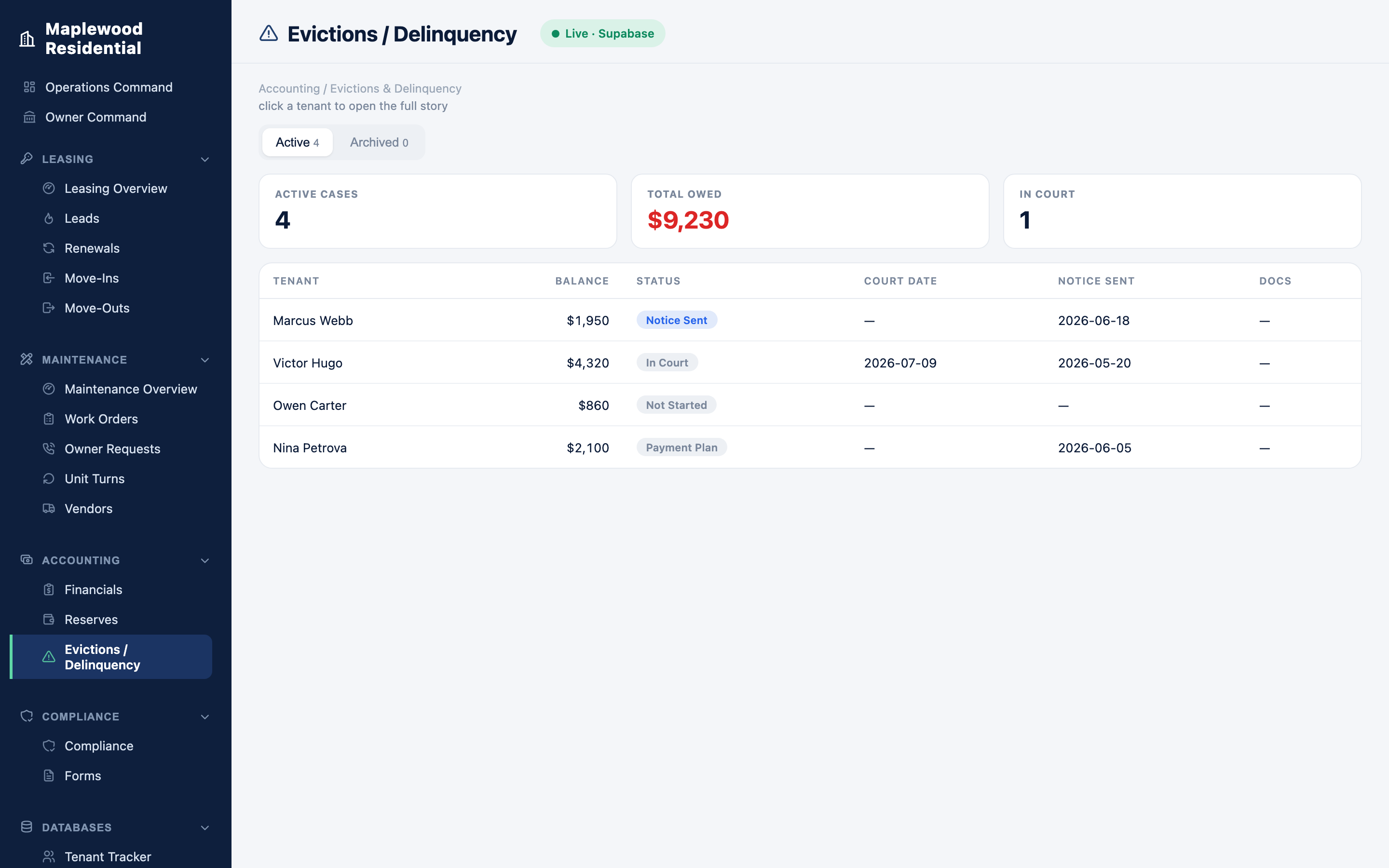
Your PMS shows you who’s late. It won’t run the follow-up. The reminder, the demand notice, the payment-plan offer, the escalation to a person — each timed to the account and to local law — is a sequence the software displays but doesn’t execute. So a manager works a delinquency list by hand, and the 18.6 minutes of labor the average late payment costs (per NARPM’s 2025 benchmark) stacks up fast.
3. Maintenance intake and dispatch
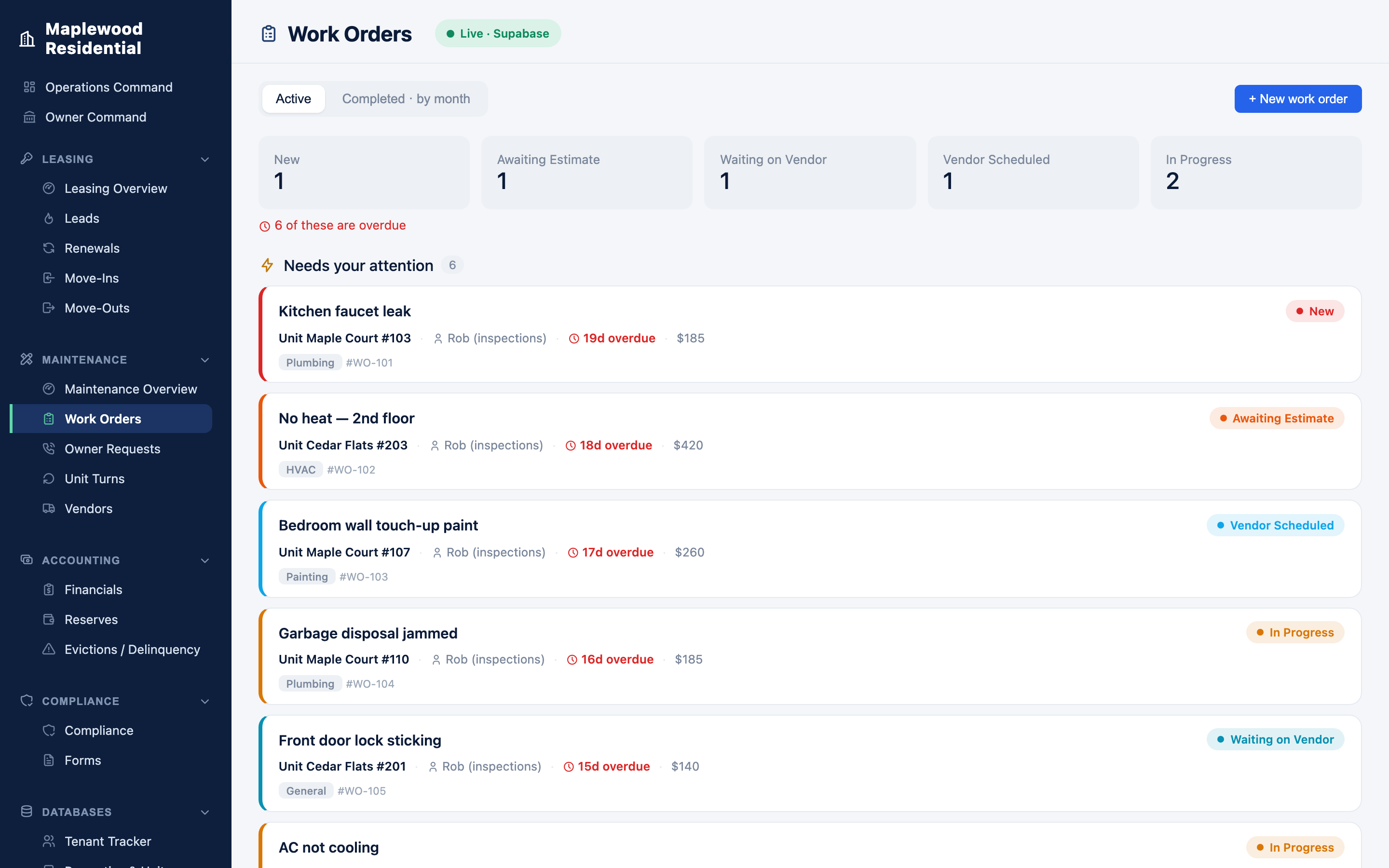
A work order in your PMS is a record. The intake before it — a tenant text or call turned into a categorized, prioritized, routed job with the tenant updated and the vendor confirmed — happens in someone’s inbox and phone. Maintenance coordinators spend an estimated 15 hours a week on exactly this connective work that the system of record doesn’t touch.
4. Owner reporting
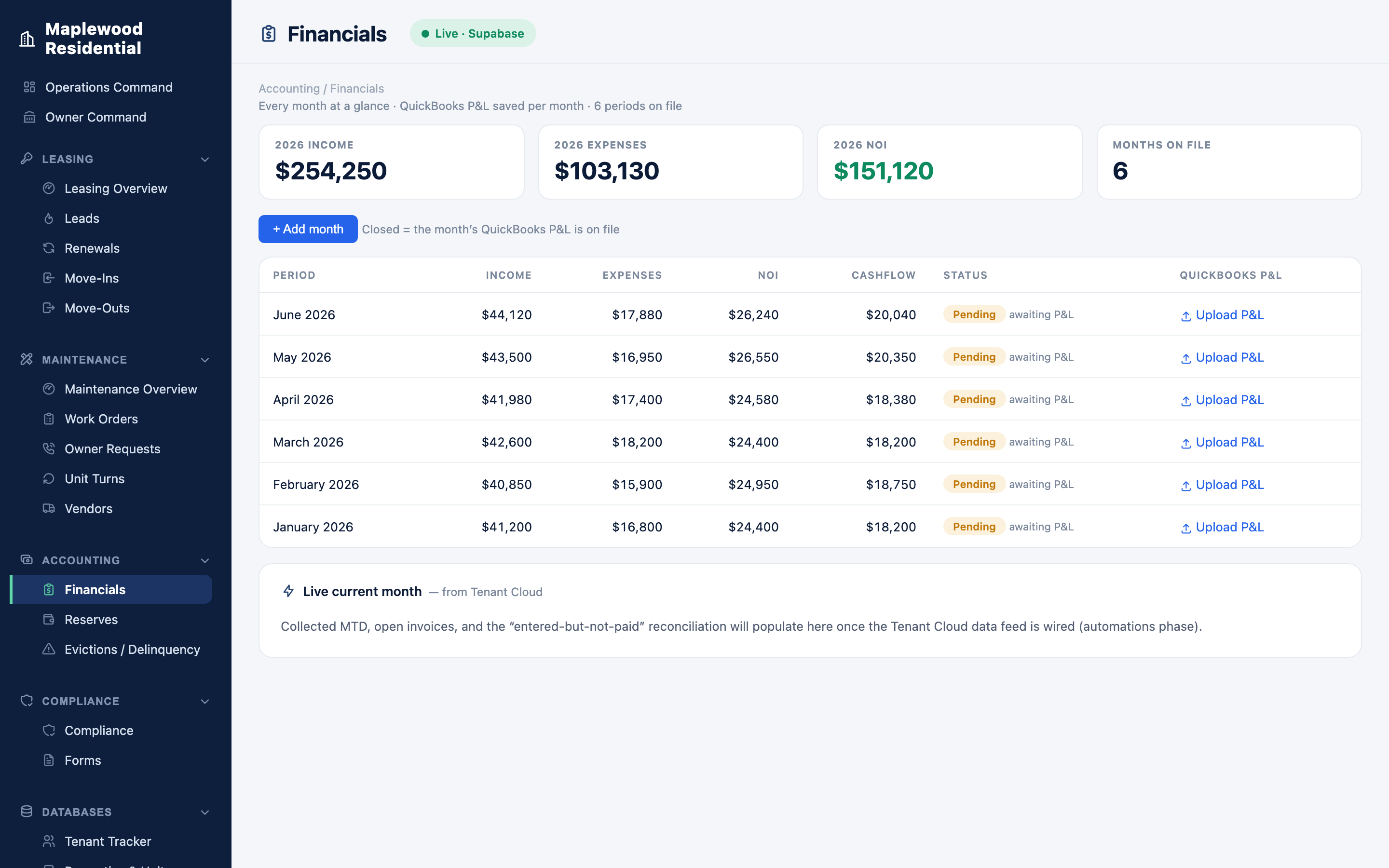
The numbers live in your PMS. The report — pulled, reconciled across the spreadsheets the PMS doesn’t own, formatted, and sent on a schedule each owner expects — is assembled by hand every month. It’s the most visible work product you produce and the one most likely to be late.
The pattern: a system of action on top of your system of record
Notice what these four have in common. The data already lives in your PMS. What’s missing is the layer that acts on it — the triggers, sequences, and definitions of done that turn a record into a running workflow. That’s a property management operating system: not a replacement for AppFolio or Buildium, but the system of action that sits on top and closes the tabs they leave open.
You don’t need new software. You need the four open workflows wired shut — on top of the tools you already pay for.